If you own acreage near Celina, you may already know that selling land is rarely as simple as putting a sign out front and waiting for offers. Buyers are not just evaluating the dirt. They are also evaluating access, utilities, floodplain, septic options, and the rules that apply to the tract. When you understand those moving parts before you list, you can price more confidently, market more effectively, and avoid surprises during due diligence. Let’s dive in.
Why jurisdiction matters first
One of the most important details about acreage near Celina is where the property sits from a jurisdiction standpoint. A tract may be inside Celina city limits, inside Celina’s ETJ, or in unincorporated Collin County. That difference can shape what a buyer sees as possible and how much work they may need to do before closing.
Celina states that its subdivision ordinance applies in the ETJ, but its zoning ordinance does not. Collin County says unincorporated land does not have zoning, but the correct permits are still required. Celina also states that development in the ETJ that will be open to the public requires a development agreement and annexation.
For you as a seller, that means two tracts with similar acreage can attract very different buyers. One may appeal more to a buyer seeking a simple hold or homesite, while another may attract buyers focused on future development potential. The key is to understand and clearly present the property’s jurisdiction from the start.
What buyers look at on Celina-area acreage
Acreage buyers near Celina often move through a practical checklist before they decide what the land is worth to them. If your listing answers those questions early, you can reduce uncertainty and help serious buyers move faster.
Access and frontage
Legal access is one of the first issues buyers and lenders examine. Collin County says new parcels must have road frontage on a public road or an existing improved private road with proper ingress and egress easements. If lots do not have the required frontage, new roads may be required.
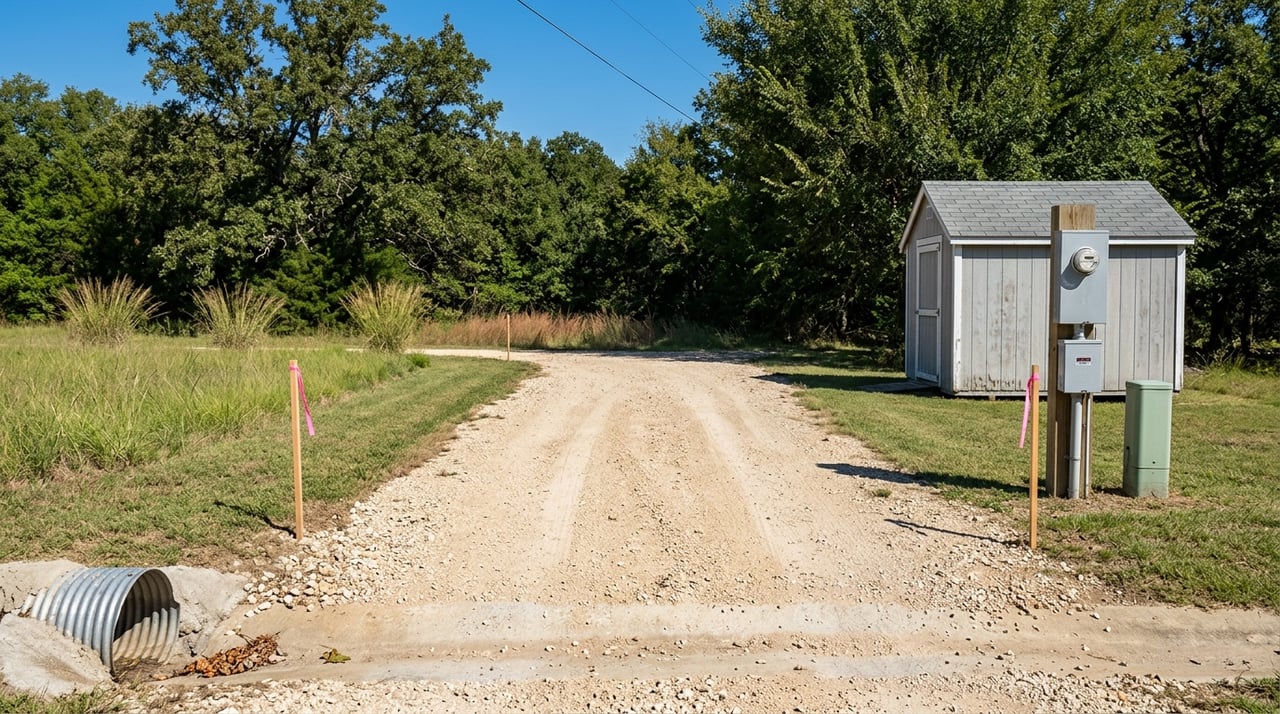
In unincorporated areas, Collin County also notes that driveway and culvert permits are common. Its Public Works department requires permits for utilities placed along or across county roads. If your tract has clear frontage, established access points, or documented easements, those details can strengthen your marketing package.
Utilities and sewer options
Utility availability can significantly affect how buyers view a property. Celina purchases treated water from the Upper Trinity Regional Water District, and the city handles water, sewer, and trash service within its utility system. At the same time, Celina’s subdivision ordinance says the city generally prefers to withhold water and sewer extensions outside city limits except in limited situations tied to annexation or written agreements.
If your acreage is outside city limits, a buyer may need to consider septic. Collin County says property outside city limits must apply for an OSSF permit, and county land-division rules require an OSSF suitability review before plat review when individual OSSFs will be used. In plain terms, utility status is not a side note. It is often central to value.
Survey, title, and property rights
A current survey can answer some of the biggest buyer questions early. Texas A&M AgriLife strongly recommends a current survey to confirm boundaries, acreage, legal access, and any encroachments or rights-of-way. That is especially important for land where fence lines, use patterns, and legal boundaries may not match perfectly.
Buyers also tend to review deed restrictions, easements, liens, leases, and property tax status. AgriLife further advises reviewing whether mineral, groundwater, or other rights actually convey with the sale. If those items are unclear, buyers may discount their offer or ask for extra time to investigate.
Drainage and floodplain
Floodplain and drainage can directly affect buildability. Collin County states that residential structures are not allowed in the floodplain, and additional steps may be needed if a tract includes FEMA floodplain. The county also states that structures are not allowed within drainage easements.
For sellers, this means floodplain is not something to gloss over. If any part of the property is affected, clear documentation can help buyers understand what is usable and what may require extra review. In some cases, a licensed surveyor may be needed if an elevation certificate becomes part of the due-diligence process.
Why some acreage sales take longer
Land sales often move on a different timeline than home sales. Even when a buyer and seller agree on price quickly, the real timeline may be driven by platting, septic review, access questions, or utility research.
Collin County says subdividing land into two or more lots may require platting unless an exception applies. Once an administratively complete plat packet is submitted, the Commissioners Court has 30 calendar days to act. If individual OSSFs are involved, the county says the OSSF suitability review can take up to 45 days once fees are paid and review begins.
That timeline matters if your likely buyer plans to divide the tract. A buyer may still be very interested, but they may need more due-diligence time and a more document-heavy contract process than a typical residential purchase.
ETJ sales can add another layer
Properties in Celina’s ETJ often require extra coordination. Collin County says platting authority in an ETJ generally shifts to the city in that ETJ. The county also notes that when a project will use individual septic systems, the applicant must still complete the OSSF suitability review through the county before city plat review.
Celina’s development handbook similarly states that ETJ properties are outside city limits but within the city’s growth boundary, and platting may be required for subdivision in the ETJ. For a seller, this is one reason ETJ status should be identified and explained early. It can shape both the buyer pool and the transaction timeline.
How to prepare acreage before listing
The strongest acreage listings usually do more than show photos and a price. They present the land in a way that helps buyers understand both the tract and the due-diligence file.
A useful preparation plan may include:
- A current survey
- Aerial maps of the tract
- Notes on road frontage and access points
- Utility status, including water and sewer availability if known
- Any known easements or rights-of-way
- Floodplain or drainage information
- OSSF or septic-related information, if applicable
- Notes on whether the tract may need platting, annexation, or other approvals for a buyer’s likely use
This kind of package helps buyers ask better questions up front. It also helps reduce the risk that a deal falls apart because key facts came to light too late.
How to market acreage near Celina well
Acreage usually needs a more targeted strategy than a standard residential listing. The buyer pool is often smaller, and the questions are more technical. That is why the presentation needs to speak to both emotional appeal and practical facts.
Strong land marketing should clearly explain what the property offers today and what a buyer may need to verify next. That includes acreage, frontage, access, utility status, improvements, and any jurisdiction or approval factors that could affect future use. Buyers looking at land near Celina are often thinking several steps ahead, so your marketing should do the same.
Texas REALTORS notes that land-focused clients should work with a Texas REALTOR®, and that professionals with land-focused expertise can help explain the transaction process and support marketing. For a seller, that matters because acreage often requires more than broad exposure. It requires organized information, targeted positioning, and clear communication with serious buyers.
When to bring in specialists
Not every acreage sale needs a large team of specialists, but many benefit from the right experts early. The earlier you identify possible issues, the more confidently you can list and negotiate.
You may want added support when:
- The tract may be subdivided
- ETJ status is unclear
- Boundaries or legal access are uncertain
- Easements, liens, leases, or property-rights questions need review
- Septic, driveway, drainage, or utility-extension questions could affect closing or future use
Surveyors can help when boundaries, acreage, or access are uncertain. Title professionals and Texas attorneys can help review easements, liens, leases, and property-rights issues. Septic or civil-engineering professionals can be especially useful when OSSF, drainage, driveway, or utility questions may influence buyer decisions.
What this means for Celina landowners
Selling acreage near Celina is not just about naming a price per acre. It is about understanding how jurisdiction, access, utilities, survey details, and approval timelines affect what your tract means to a buyer. When you prepare for those questions in advance, you put yourself in a stronger position to attract serious interest and negotiate from a place of clarity.
In a fast-growing area like Celina, where the city is planning for substantial population growth and thousands of single-family permits, buyers are paying close attention to location and future potential. That makes accurate property information even more important. A well-prepared listing can help your acreage stand out for the right reasons.
If you are thinking about selling acreage near Celina and want a practical plan for pricing, preparation, and targeted marketing, Baker Realty Group can help you move forward with local insight and hands-on guidance.
FAQs
What should Celina-area landowners know first before selling acreage?
- You should first confirm whether your property is inside Celina city limits, inside Celina’s ETJ, or in unincorporated Collin County, because that can affect subdivision rules, permits, utilities, and buyer interest.
What do buyers check when evaluating acreage near Celina?
- Buyers commonly review legal access, road frontage, utility availability, septic options, survey details, easements, property rights, and whether floodplain or drainage issues could limit use.
What can slow down a land sale in Collin County?
- Platting requirements, OSSF suitability review, utility questions, and access issues can all add time, especially if a buyer plans to divide the tract or prepare it for future development.
Why does ETJ status matter for land near Celina?
- ETJ status matters because Celina’s subdivision rules may apply there, platting authority generally shifts to the city, and some projects may require added coordination, including annexation or development agreements in certain situations.
What documents help market acreage near Celina?
- A current survey, aerial maps, frontage and access details, utility information, easement notes, floodplain or drainage information, and any known septic or platting details can help buyers evaluate the property more confidently.